How StreetLink uses AI to improve Rough Sleeping Alerts

An interview with John Manley, Data & Evaluation Lead at Home Connections
How can artificial intelligence make a meaningful difference to services supporting people sleeping rough?
We spoke to John Manley about the StreetLink AI pilot, what the team learned and what it could mean for the future of housing services.
Helping people provide better information
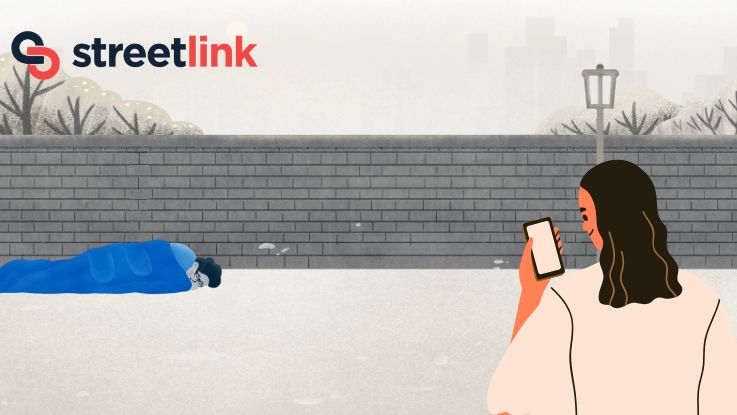
StreetLink connects people sleeping rough with local outreach services. However, the usefulness of an alert can depend on the information provided.
“People often want to help but may not know what information outreach teams need. A location might be vague or missing useful details, such as nearby landmarks or access points.
We wanted to explore whether AI could provide simple, real-time guidance to help people submit better-quality alerts without making the process more complicated.”
Supporting the reporting process
The AI provides prompts when more detail could make an alert more useful to an outreach team.
“As someone completes the form, the AI analyses the information and suggests where further detail may help. This could include nearby landmarks, entrances, clothing or other identifying information.
We also explored how AI could support alert quality assessment and prioritisation. Professional judgement, however, always remains with local authority outreach teams.
The aim isn’t to replace people or automate decisions. It’s to help people provide better information so outreach teams can work more effectively.”
Measuring the impact
The team compared pilot areas with historical performance and comparable areas where the AI features were not being tested.
39%
increase in people successfully found
Around 50%
reduction in unsuccessful outreach linked to poor-quality information
39.4%
of AI prompts shown led to improved alert quality
“The findings were encouraging. Location descriptions increased by 45% and descriptions of people by 54%. In 39.4% of cases where an AI prompt was shown, it led to an improvement in alert quality.
Most importantly, the proportion of people successfully found increased by 39%, while unsuccessful outreach linked to poor-quality information fell by around 50%.
These improvements were significantly stronger than those seen in comparable non-pilot areas, giving us confidence that the AI was making a measurable difference.”
What this means for people sleeping rough
Clearer information can help outreach workers locate someone and offer support sooner.
“Technology won’t solve rough sleeping on its own, but it can remove some of the practical barriers outreach teams face.
Better information creates better opportunities to connect people with the services they need.”
What the team learned
The response from people using the AI guidance was positive.
“There’s often an assumption that AI makes systems more complicated, but our experience was the opposite. Most people found the process easy, and many said the prompts helped them provide more useful information.
Feedback from participating local authorities also helped us understand what worked and where the solution could be improved.”
What happens next?
The evaluation recommends progressing towards a wider rollout while continuing to refine the technology.
“The next phase includes further work on AI quality scoring, safeguarding detection and prioritisation. We’ll also continue working with local authorities to ensure the technology fits within their existing processes.
This isn’t the end of the journey. It’s the beginning of the next phase.”
The potential beyond StreetLink
Similar technology could support other housing services where people complete forms, submit applications or report issues.
“AI could help people provide clearer information, reduce incomplete submissions and improve the data received by frontline teams.
This could apply to homelessness applications, housing registers, repairs, temporary accommodation services and customer enquiries.
The objective remains the same: helping people provide better information so housing professionals can make better-informed decisions. AI should support people, not replace them.”
Starting with a genuine service challenge
For John, the project’s central lesson is that AI should address a clear need rather than be introduced for its own sake.
“Successful AI projects begin with a genuine service challenge, not the technology itself.
This pilot brought together Home Connections, MHCLG, local authorities and our development team.
By combining evidence, user feedback and continuous improvement, we’ve shown how AI can be introduced responsibly to improve public services.”
Learn more about StreetLink
StreetLink enables members of the public to connect people sleeping rough with local support services.
Related Stories



World Homeless Day: Building Pathways Out of Homelessness